
Discover How E-E-A-T In 2025 Builds Unmatched Credibility!
You work hard, but your blog still slips down the search results or gets lost in all that digital noise. Search engines now lean heavily on E-E-A-T, which means they judge your expertise and trustworthiness with every post you publish.
This guide breaks down how to show real experience, use strong author bios, and keep content quality high for better user engagement and SERP results. Want to stand out as a credible brand? Keep reading to find out how you can boost your online reputation in 2025.
Key Takeaways
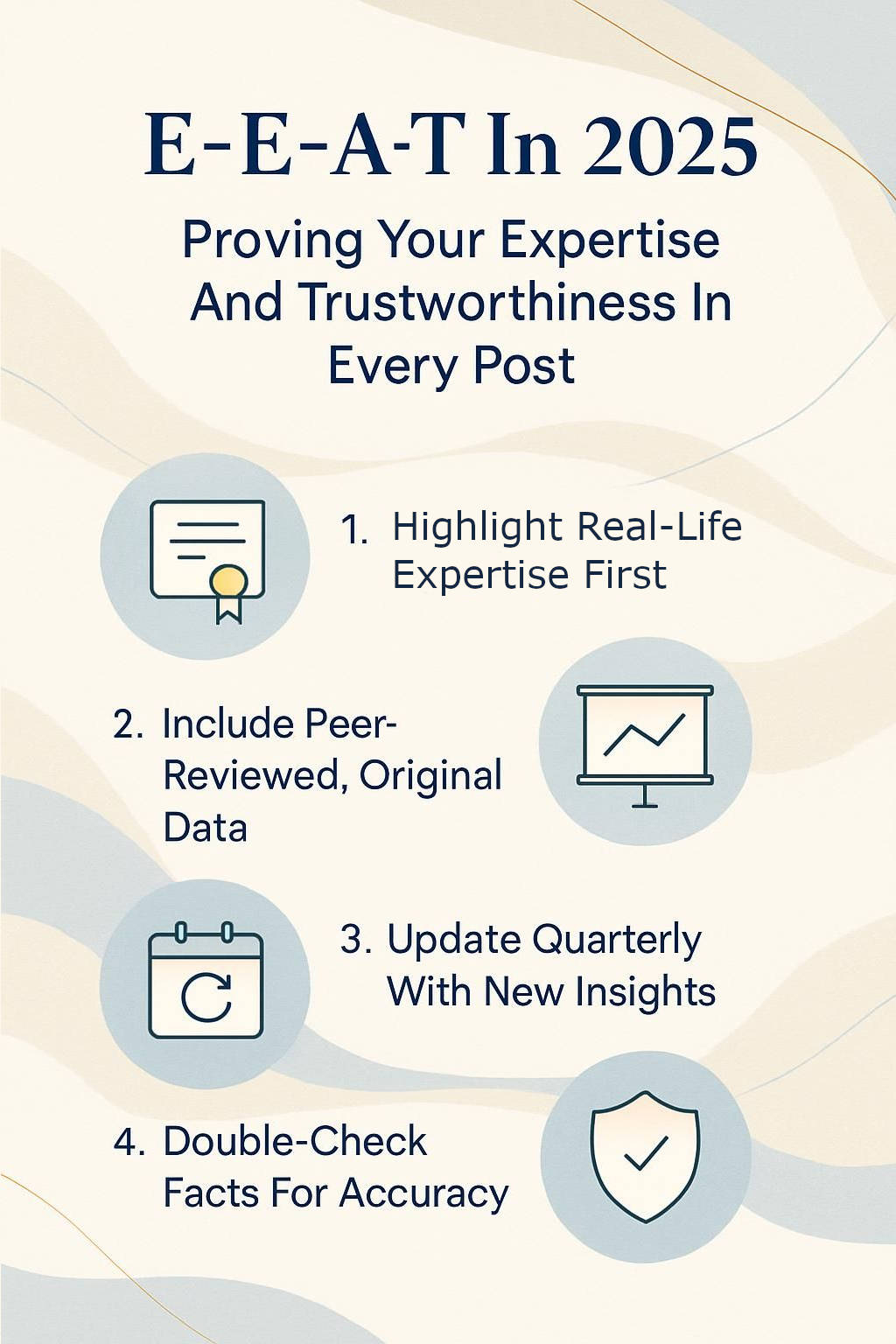
- In 2025, Google’s E-E-A-T stands for Experience, Expertise, Authoritativeness, and Trustworthiness; it now adds more weight to lived experiences, verified credentials in author bios, and real-world case studies—especially in fields like finance or healthcare.
- Search engine algorithms flag AI-generated content that lacks expert input or proof of hands-on use. Pages with clear author pages (listing degrees like MDs or CPAs), privacy policies, and up-to-date About Us information rank higher on SERPs.
- Sharing original research data—like surveys from real customers or unique statistics from your analytics—boosts brand authority faster than repurposed blog posts. Linking to peer-reviewed studies or official sources increases trustworthiness in user-facing topics such as health advice.
- Content freshness is critical: updating articles quarterly with recent stats or examples helps lower bounce rates and raises time on page. Google measures these signals closely after each algorithm update for quality checks.
- YMYL (“Your Money or Your Life”) categories get extra scrutiny under E-E-A-T. Sites need strict fact-checking by professionals and must display strong contact info plus transparent terms of service to protect users when offering legal advice, financial tips, medical guidance, product reviews—or anything else impacting someone’s safety or wallet.
Understanding E-E-A-T in 2025
Google has given E-E-A-T a fresh coat of paint, making digital marketing and search engine optimization all about trust. Brands now need lived insight and strong author bios if they want to catch both smart algorithms and real people scrolling on Instagram or LinkedIn.
What Does E-E-A-T Stand For?
E-E-A-T means Experience, Expertise, Authoritativeness, and Trustworthiness. Search engines like Google use these four areas to judge content quality for social media posts, product reviews, and health advice as well as financial tips found online.
In 2025, showing real experience matters more than ever; sharing personal stories or clear case studies can boost your credibility with users and search engine algorithms alike.
A writer’s education adds to expertise while author bios with contact information make it easier for readers to check credentials on platforms such as LinkedIn or Instagram. Brands that cite official statistics from academic studies or peer-reviewed journals build stronger authority in their fields.
Good privacy policies plus visible terms of service help show trustworthiness in digital marketing spaces full of false information and fake news.
Experience isn’t just a buzzword now; it’s the backbone that supports every trustworthy post.
Why “Experience” Was Added to E-A-T
After breaking down what each letter stands for, the addition of “Experience” to E-A-T made waves in SEO and content creation. Search engines like Google realized that just sharing facts and academic knowledge is not enough anymore.
People want real stories, tried-and-tested advice, and examples from someone who has walked the walk—not just talked the talk. That’s why “Experience” came into play in December 2022, turning E-A-T into E-E-A-T.
This update means algorithms now look for lived experience or practical engagement in every post, especially on topics like health care content or financial advice. Say you write a product review—Google wants proof you actually used it with your own hands before giving your opinion.
Brands with verified experts give themselves a leg up by delivering content rooted in reality: case studies, user-generated content, photos from actual users—those win trust and boost online reputation management.
More weight goes to those posts today because audience trust hinges on authenticity; cookie-cutter blog articles stuffed with keywords are outclassed by genuine accounts showing proven involvement.
The message is crystal clear: search engine optimization strategies must focus on authentic insights if they want higher visibility and lasting authority online.

The Four Pillars of E-E-A-T
Think of E-E-A-T as the secret sauce for content creators aiming to boost google search rankings and user experience. These four factors set your blog apart, helping you build brand authority that earns you nods from both readers and Google algorithms.
Experience: Real-World Insights
Sharing lived experience makes content shine with authenticity. In 2025, Google’s algorithm puts a spotlight on user experience and first-hand knowledge. Audiences want more than just technical jargon or theory from content creators; they crave stories, product reviews, case studies, and actionable advice that come straight from real people like them.
For example, an influencer reviewing the latest AI tool or a financial advisor talking about stock tips based on their own wins (and mistakes) captures attention fast.
Real-world insights boost engagement and trust in every post. Readers see someone who has walked in their shoes, making contact information and author bios much more believable. Brands like Gadgetlesstech Digital Marketing lead the charge by helping businesses showcase lived expertise across sites—think speaking engagements featured on About Us pages or original research shared in blog posts.
Such moves don’t just please search engine algorithms; they increase time on page, lower bounce rate numbers, build brand authority, and make your SEO strategy worth its salt.
Expertise: Demonstrating Knowledge and Skills
Expertise in 2025 means more than just saying you know your topic. Show it with real skills, accurate information, and up-to-date content. Google algorithms will keep an eagle eye on things like author bios, peer-reviewed studies, social proof from places like Yelp or Twitter, and quality product reviews loaded with details.
Proving expertise isn’t a one-and-done task; it’s about building a clear track record with strong case studies, statistics that matter, and industry recognition from authoritative sources.
Subject matter experts lead the charge for trustworthy advice in areas like financial advice or healthcare content. Your readers crave answers they can trust so use original research and link to credible sources every time.
Author pages must shine with credentials—think speaking engagements or published work. Gadgetslesstech Digital Marketing stands out here by focusing on SEO tools for deep keyword research and technical SEO improvements that boost brand authority fast; this keeps web traffic loyal while bounce rates drop off the face of the earth.
Next comes Authoritativeness: Building a Recognized Reputation—where visibility meets reputation head-on.
Authoritativeness: Building a Recognized Reputation
Google’s latest algorithms now scan for more than surface-level wisdom. Consistent content creation boosts brand authority, especially when you show deep knowledge in areas like healthcare content or financial advice.
Author bios with credentials add punch to your reputation. Earning mentions from authoritative sources or landing backlinks from trusted sites shows both users and search engines that your voice matters.
Speaking engagements, guest posts, and peer-reviewed studies can pull extra weight, too.
A simple “About Us” page with updated contact information builds trust fast. Google My Business listings, clear privacy policies, and proper terms of service help people feel safe on your site.
SEO improvements like lowering bounce rate or increasing time on page also play a part in proving credibility. Influencers who share lived experience create touchpoints that boost user intent metrics across mobile platforms.
In 2025’s digital landscape, brand authority grows with honest reviews and transparent case studies; these keep clickbait at bay while lifting your content quality above artificial intelligence noise.
Trustworthiness: The Foundation of E-E-A-T
Trustworthiness glues E-E-A-T together and keeps readers coming back. Google algorithms, hungry for honest content, now check facts and source reliability more than ever before. Pages with clear author bios, privacy policies, “About Us” info, and visible contact information score high on credibility.
Opaque websites or missing details? They spark suspicion in both users and search engines.
Gadgetlesstech Digital Marketing helps brands shine by using real experts, accurate product reviews, case studies from lived experience, and updates to keep their digital platforms honest and fresh.
Trustworthy content supports strong user intent signals like low bounce rate or longer time on page; visitors stick around when they sense honesty. Transparent practices such as listing financial advice sources or linking to peer-reviewed studies raise trust levels fast.
In 2025’s digital landscape packed with AI-generated content and shifting search engine optimization rules, trust is your biggest asset—treat it like gold!

Recent Algorithm Updates and Their Impact on E-E-A-T
Google keeps mixing up the SEO pot with search engine algorithms, so if you want your content quality to pass every test—especially in this new age of AI-generated posts and product reviews—you’ll want to keep reading.
AI Content Under Scrutiny
AI-generated content, especially in 2025, faces sharp eyes from search engine algorithms. Recent updates push platforms to judge content quality harder than ever before. Artificial intelligence can produce blog posts and product reviews fast, but not all of them reflect true expertise or genuine lived experience, which E-E-A-T demands.
Search engines now scan for real author bios, accurate information, and signals of trustworthiness like privacy policies or about us pages.
Content creators who rely on AI must vet their articles with care. Google’s algorithm will downgrade work that shows misleading information or lacks proof of authority. Financial advice or healthcare content calls for double-checking by experts with credentials listed on clear author pages.
Only credible sources and original research will hold up under this close watch; fake case studies or outdated facts get flagged faster than you can say “SEO.” Today’s digital landscape rewards depth, accuracy, and honest user intent above shortcuts—a win for readers craving reliable answers online.
The Increased Weight of “Experience”
Google algorithms have turned up the spotlight on “Experience” in E-E-A-T, especially after recent updates. Now, search engines care if you know your stuff from real life, not just book smarts or fancy degrees.
Product reviews with personal use stories, financial advice based on lived experience, and healthcare content featuring patient journeys move up in rankings faster than dry summaries.
Writers need to show they’ve used a product, handled actual cases or worked through problems themselves. Google’s systems check for signals like author bios that highlight qualifications and about us pages showing background info.
User engagement grows when readers spot privacy policies and contact information—they see a trustworthy brand authority behind the words. So sprinkle true stories and clear examples into posts; trust builds one story at a time in this digital landscape.
Prioritization of Fresh and Original Content
With more weight now placed on genuine experience, search engine algorithms in 2025 have put a sharp spotlight on fresh and original content. Algorithm updates are not playing favorites; they scrutinize every post for signs of rehashed material or outdated advice.
Lived stories and up-to-date data give your posts the edge, helping them pass tough quality checks.
Digital marketing teams must pivot quickly, updating product reviews, financial advice, and healthcare content to match user intent and improve SEO performance metrics like bounce rate and time on page.
Search engines want proof of expertise through recent case studies or peer-reviewed studies instead of recycled tips. Even AI-generated content has to meet strict standards by offering new insights or real-world examples based on accurate information from authoritative sources.
Keep that “content freshness” dial turned up—stale ideas are getting left out in the cold with each update.

Strategies to Strengthen E-E-A-T in 2025
Want your site to stand out in Google’s search results? Stick around, these strategies for boosting your content credibility and brand authority might just keep you ahead of changing algorithms and user expectations.
Use Verified Experts for Content Creation
Verified experts make content shine. Readers and search engines both notice accurate, credible information from real authority figures.
- Verified experts help boost brand authority and trustworthiness online, which leads to higher retention and longer time on page for readers.
- In 2025, Google places heavy value on expert-driven content; its algorithms scan author bios to see who’s behind each piece.
- Include clear author pages with qualifications and credentials – think medical degrees for healthcare content or CPA licenses for financial advice.
- Experts lend their names to original research, product reviews, case studies, and peer-reviewed studies that increase SEO (search engine optimization) rankings.
- Using named professionals in your strategy builds industry recognition and encourages authoritative sources to link back, giving you quality backlinks.
- Listing contact information, speaking engagements, or published articles can further show lived experience and deep subject knowledge.
- Content written by specialists stands up better against AI-generated content since it reflects user intent and provides well-researched insights that artificial intelligence still struggles to match in depth.
- Gadgetlesstech Digital Marketing uses this approach to build credibility across topics like technical SEO or online marketing so pages stay at the top of Google search results.
- Verified authors signal fresh thinking as they update posts regularly to reflect policy changes—think new privacy policies or changes in terms of service—keeping every post relevant so bounce rates stay low.
- Readers feel safer with trusted voices guiding them in YMYL content such as health decisions, financial advice, or well-being tips because accuracy matters most where stakes are highest.
Incorporate Original Research and Data
Original research pushes your content ahead of the pack. It helps show Google Algorithms and readers that you really know your stuff.
- Collect survey results or case studies from real customers to boost content credibility, especially in healthcare content or financial advice.
- Use original data to add depth, like sharing statistics on bounce rate or time on page from your own analytics.
- Share product reviews backed by your own tests, not just AI-generated content or secondhand opinions.
- Interview industry experts for unique quotes; this strengthens author bios and builds brand authority fast.
- Publish peer-reviewed studies and link them within your posts; this satisfies search engine optimization (SEO) needs and supports YMYL content guidelines.
- Show evidence through screenshots, original charts, or tables; these help keep user experience smooth on both desktop and mobile devices.
- Tie research findings to user intent, so people actually get the answers they searched for—Google loves this for ranking.
- Reference authoritative sources like PubMed for medical topics or cite Google My Business stats for local SEO improvements.
- Update your data each year; stale info drops trustworthiness in the eyes of both users and search engine algorithms.
- Provide full transparency with contact information, about us pages, privacy policies, terms of service links, all boosting trust with both visitors and bots.
Build Author Pages with Credentials
Building strong author pages is a smart move for boosting trust and authority. Readers want to know who’s giving advice, be it on financial tips or healthcare content.
- Showcase the author’s full name, professional photo, and job title. This human touch sets your site apart from faceless AI content.
- List relevant credentials, degrees, and licenses next to each name. A “PhD” or “Certified Nutritionist” can work wonders for content credibility.
- Add short bios highlighting each writer’s lived experience and industry background. A good anecdote draws people in.
- Link to peer-reviewed studies or published research authored by your team. Quality backlinks tell Google algorithms you mean business.
- Share speaking engagements, awards, or features on authoritative sources like Forbes or WebMD right on their profile.
- Provide clear contact information or LinkedIn profiles to boost user trust.
- Feature links to other articles written by the same expert for depth and user experience (UX).
- Include privacy policies and terms of service on every page, even bios, to show transparency about personal data.
- Optimize these pages with SEO basics: alt text for images, mobile responsiveness using Google PageSpeed tools, and schema markup so search engines understand your star writers.
- Gadgetlesstech Digital Marketing specializes in helping brands craft author pages that build both authority and loyalty.
High-standard spaces like financial advice blogs or product reviews need this level of detail even more under Google E-E-A-T guidelines; up next is how verified experts can turn quality SEO content into gold in 2025.

Earn Mentions and Backlinks from Trusted Sources
After building out strong author pages, it’s time to focus on getting recognition from voices people already trust. Top mentions and backlinks from credible sources can push your brand authority sky-high.
- Secure mentions from industry leaders to boost E-E-A-T, like earning a gold star in a crowded classroom. Well-known experts or sites often shape how Google measures content credibility, especially after recent google algorithm updates.
- Create high-quality, original research with fresh data that industry journals or authoritative sources want to cite. Think peer-reviewed studies or unique product reviews—these draw eyes and links.
- Reach out for speaking engagements at webinars, podcasts, or conferences related to SEO, healthcare content, financial advice, or technical seo. Event organizers may link back to your about us page or author bios.
- Build partnerships with trusted brands and organizations for co-authored articles or case studies; shared expertise means shared audiences and more backlinks.
- Engage on social media with thought leaders in your field such as sharing their research insights or joining conversations about google eeat, content optimization, user experience, or YMYL content.
- Publish timely content updates based on new regulations or search engine algorithms; someone quoting the latest 2025 info is more likely to earn citations than recycled material.
- List your business on Google My Business for local SEO gains; directories are a steady flow of reputable mentions that build trustworthiness online.
- Highlight results using statistics such as bounce rate reductions or higher time on page after site improvements and encourage partners to reference these wins.
- Share transparent contact information and privacy policies so other websites feel safe linking to you; trust starts with clear details available up front.
Getting noticed by respected voices isn’t just luck—it’s strategy mixed with smart outreach and proven expertise across every post you publish in this digital landscape!
Keep Your Content Updated Regularly
Moving from earning trusted mentions, keeping your content fresh is just as crucial. Search engine algorithms notice sites that stay active, and so do readers.
- Update articles at least every quarter to show Google your site is alive and kicking. Even a simple date change signals relevance.
- Use fresh statistics, news, or expert quotes to support content quality. Swapping out outdated numbers for the latest ones boosts trustworthiness for both humans and bots.
- Refresh product reviews after major updates or releases. Readers want opinions on new features, not last year’s version collecting digital dust.
- Edit healthcare content as soon as new peer-reviewed studies or guidelines drop. Accuracy matters most where health or money is involved.
- Include real stories or case studies from recent clients to build brand authority and show lived experience in your niche.
- Post regular blog updates on industry trends using original research and data from sources like Statista, Pew Research Center, or Gartner. Back up claims with facts that matter today, not yesterday.
- Add an author bio with updated credentials to every post. Readers check qualifications before taking financial advice or following SEO tips.
- Monitor bounce rate and time on page via Google Analytics after big updates. Lower bounce rates often mean users are finding what they need—Google notices too.
- Link older posts to newer ones whenever content overlaps, using technical SEO best practices. Internal linking spreads authority across your site while helping readers dig deeper into related topics.
- Update contact information, privacy policies, terms of service, and about us pages with recent changes in staff or business structure. Users expect honesty; search engines reward transparency.
Gadgetlesstech Digital Marketing recommends reviewing all main pages monthly for possible quick wins—a new link here, fresher stats there—so nothing slips through the cracks in the fast-moving digital landscape.

E-E-A-T for YMYL (Your Money or Your Life) Content
Some topics can change lives, spark worry, or even affect someone’s wallet. If you write about health care content, financial advice, or anything else YMYL-related—Google algorithms check your content quality and content credibility with a microscope.
Industries That Require a Higher Standard
Some industries hold bigger risks and need sharper oversight. Google’s algorithms watch these areas closer for E-E-A-T signals to protect users from errors, scams, or harmful content.
- Finance demands strong signals of credibility and expertise. People rely on financial advice for savings, investments, and taxes. False claims can lead to real losses, so Google ranks content with clear author bios, research data, and expert credentials higher.
- Healthcare topics need the highest level of trustworthiness and evidence-based info. Misinformation about medications or health treatments can be dangerous. Well-known doctors or industry pros often write top-ranking healthcare content. Peer-reviewed studies are key here.
- Legal services cover contracts, personal rights, and laws that change lives. Wrong legal advice can cost someone dearly in court or in fines. Law firms must provide updated lawyer profiles with credentials and keep privacy policies up-to-date for user protection.
- Nutrition websites shape diets and family health choices every day. Incorrect dietary tips might spark allergies or even life-threatening reactions for people with special conditions like diabetes.
- Product reviews are critical before big purchases in tech and home goods; faulty guidance can lead to wasted money or safety issues like faulty electronics.
- Mental health resources support some of society’s most vulnerable individuals; misleading content about therapies or self-help methods has immediate harm potential.
- Childcare information gets careful review since mistakes can impact kids’ growth and safety; brands need verified experts in child development contributing their knowledge regularly.
- Insurance guides direct readers through tricky policies that affect coverage during emergencies; reliable sources gain more backlinks from recognized authorities in insurance law or consumer watchdogs.
- Environmental science sites explaining climate change influence public opinion and policy decisions around the world; accurate information supported by original research builds user trust fast.
- Educational platforms teaching technical subjects like programming or SEO shape careers—wrong facts could derail job prospects, so credible sources matter most here too.
Each sector above impacts either one’s wallet, body, legal status, mental state, security, children’s well-being—or even global policies—so only well-researched professional-backed info ranks high according to search engine optimization standards in 2025.
Adapting Content for YMYL Guidelines
High stakes come with YMYL content. Google wants digital information that helps people make safe decisions about money, health, or life choices.
- Add author bios at the top or bottom of each piece; highlight credentials, degrees, and real-life experience to add content credibility.
- Show clear contact information and an About Us page so users know who stands behind your advice and how to reach you.
- Fact-check every statistic, claim, or resource; cite authoritative sources like peer-reviewed studies or well-known organizations in healthcare and finance.
- Always display up-to-date privacy policies and terms of service links where readers can see them.
- Include original research from case studies or customer feedback to show you offer more than recycled advice found elsewhere online.
- Update product reviews often; include new data points, user experiences, and industry changes relevant in 2025 for seo benefits.
- Use technical SEO tools such as Google My Business for local businesses dealing with financial advice or healthcare content.
- Ask recognized experts like financial planners (CFPs) or licensed doctors to approve content before it goes live.
- Write using simple language that matches user intent; avoid jargon unless it is explained for newcomers to complex topics like investing or medical care.
- Earn backlinks by linking your content strategy with trustworthy sites; this shows search engine algorithms you value brand authority within your niche.
Balancing AI-generated content while keeping these strict guidelines sets the stage for discussing human oversight next.

Balancing AI and E-E-A-T
AI content is everywhere, but getting it to hit the sweet spot for Google E-E-A-T can feel like solving a tough puzzle with moving pieces. Mix smart search engine optimization (SEO) and human review if you want your product reviews or healthcare content to shine bright in modern search engine algorithms.
Human Oversight in AI-Generated Content
Human review shapes the quality and truth of ai-generated content. Editors catch slip-ups, give fact-checks a human touch, and keep wild claims at bay. Google’s search engine algorithms are sharp, but real eyes pick up small details artificial intelligence misses.
This teamwork makes your blog posts feel genuine, grounded in lived experience instead of plain data outputs.
Companies use experts to check financial advice or healthcare content before it goes live. A person with actual knowledge can spot odd suggestions or digital blunders faster than any bot.
By mixing machine speed with author bios packed full of credentials and original research, brands build trustworthiness that stands out online in 2025. The blend creates better product reviews, more credible case studies, and deeper content quality for YMYL topics—because every line feels reviewed by someone who cares about accuracy as much as the audience does.
Ensuring AI Content Meets Quality Standards
AI-generated content must tick all the right boxes for quality, especially as Google E-E-A-T grows more important in 2025. Content creators need to mix expert input, real-world case studies and accurate information into every post, not just words spun by artificial intelligence.
Google’s algorithms watch closely for signs of trustworthiness and depth, so stuffing articles with bland filler is out. Genuine author bios, up-to-date data points and proper references to authoritative sources make a difference.
Gadgetlesstech Digital Marketing uses strategies like peer-reviewed studies, regular content updates, and original research to raise the bar on ai content. Businesses wanting better search engine optimization (SEO) should focus on clear privacy policies, financial advice from recognized experts and visible contact information.
Site owners who ignore these basics risk dropping in rankings or losing brand authority fast as bounce rate climbs and time on page falls. Quality is not just about looking smart; it keeps user intent at the center while keeping bots happy too!

Conclusion
Staying sharp with E-E-A-T in 2025 is your ticket to top rankings and audience trust. Every post should shine with real knowledge, clear author bios, and strong content quality. Google algorithms are hungry for credible voices, so back up claims with original research or case studies whenever you can.
Keep your site updated, use privacy policies and about us pages to build faith, and lean on expert voices who know their stuff. Even in this age of artificial intelligence, credibility comes from honest information and an authentic touch that no bot alone can provide.