
Mastering Video SEO: Boosting Visibility On YouTube And Social Media
You upload videos, but hardly anyone watches them. Sound familiar? Here’s something interesting: about 70% of views on YouTube come from the platform’s own recommendation system. This guide shows you practical ways to master video SEO and get your content noticed on YouTube and social media.
Keep reading to learn strategies that actually work for boosting your video visibility.
Key Takeaways
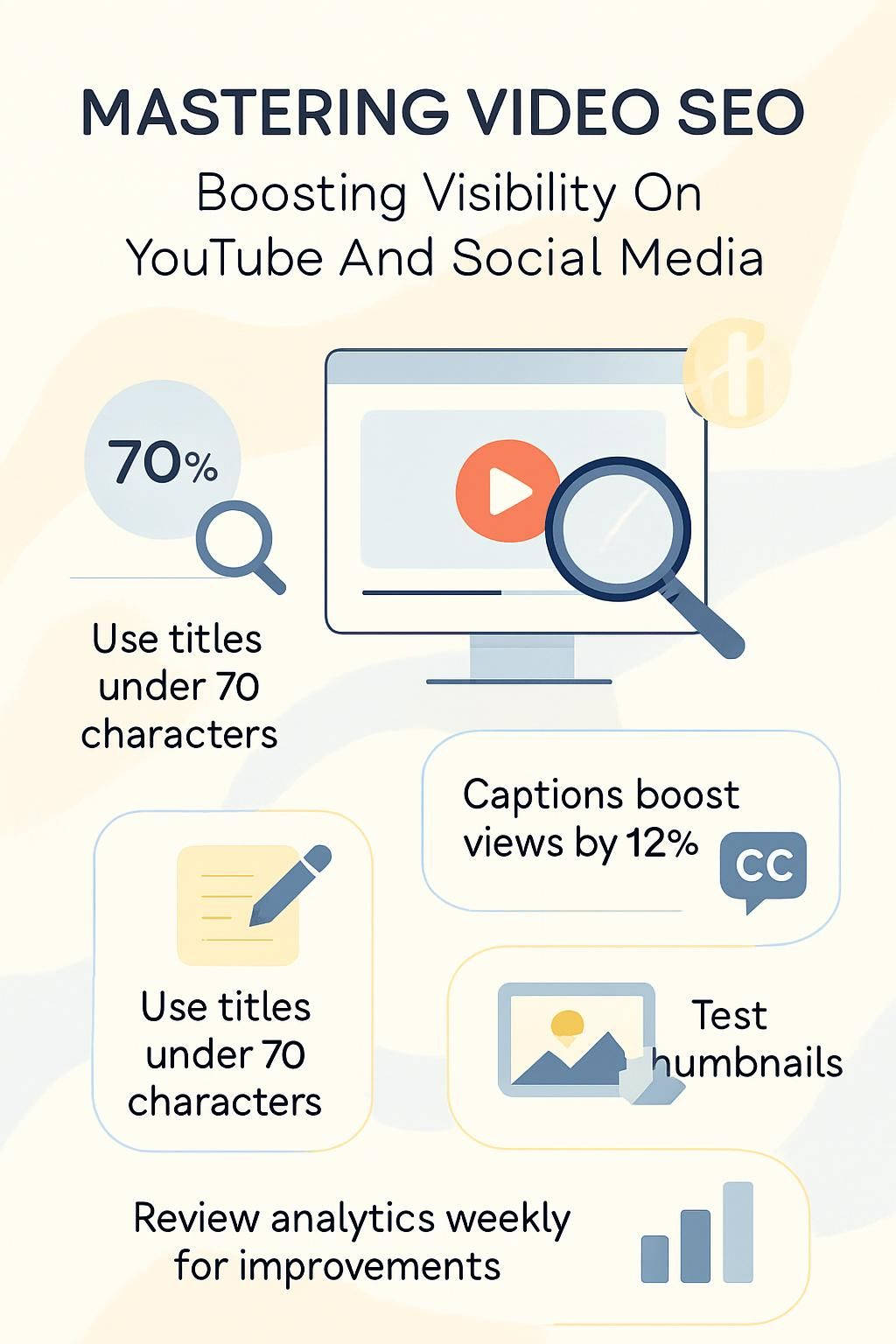
- About 70% of YouTube views come from recommended videos. Use keyword tools like TubeBuddy and vidIQ to find the right words. Put them in your titles (keep under 70 characters), tags, and descriptions.
- Create thumbnails with bright colors, clear branding, and readable text. Tools like Canva or Adobe Express make this easy. Test different designs in YouTube Studio to see what gets more clicks.
- Add closed captions using SRT files. They help viewers who watch without sound or have hearing needs. Facebook reports 12% more video views when captions are included.
- Share your videos on Facebook, Instagram, and TikTok to reach more people quickly. Working with influencers brings new viewers to your content faster than ads alone.
- Check YouTube Analytics and Google Data Studio regularly. Look at audience retention and peak viewing times. Then adjust your strategy each week for better results.
Understanding Video SEO
Video SEO helps your content show up when people search. It’s like giving your videos a map to find the right viewers. Platforms use special rules called algorithms to decide which videos appear first. Give them what they want, and your content will shine.
How video SEO works on YouTube and social media
YouTube and social media platforms use computer programs to pick which videos show up first. Your search visibility depends on three main things. First, the keywords you use. Second, how much people interact with your video. Third, signals that tell the platform your video is good.
Creators use tools like TubeBuddy or vidIQ to find search terms people actually type. They put these keywords in titles, tags, and descriptions. Keep titles catchy and around 70 characters so people want to click. As YouTube educator Nick Nimmin says, “If your title sings, your stats will too.”
Metadata is just as important as the video itself. What’s metadata? It’s the information about your video, like its title and description. Strong thumbnails grab attention. Clear descriptions help both viewers and platforms understand your content. Playlists group related videos together. This keeps viewers watching longer, which the algorithm loves.
Adding closed captions makes your videos accessible to everyone. They help people with hearing needs. They also help those watching without sound. Plus, search bots can read captions to better understand your content. This boosts your SEO from day one.
Sharing on social media widens your reach. Post on TikTok or Facebook to get more eyes on your content. More views, likes, shares, and comments tell the algorithm your video is worth promoting. This creates a cycle of success that keeps growing.

Importance of optimizing for platform-specific algorithms
Now that you understand how video SEO works, let’s talk about why each platform needs its own approach. Facebook, TikTok, Instagram, and YouTube all use different rules for ranking videos. Think of it like this: each platform has its own secret recipe for success.
YouTube pays attention to metadata optimization. What does that mean? It looks at keywords in your title, eye-catching thumbnails, trending hashtags, and tags that match what people search for. Skipping these steps is like playing basketball in flip-flops. You won’t get the results you want.
Marketers can’t just copy and paste the same text everywhere. Each platform needs something different. Tools like TubeBuddy or vidIQ help you find the best keywords for each network. Keep titles short with main keywords, under 70 characters. Long titles get cut off on phones, and most people watch on mobile devices.
Hashtags boost content discoverability. Viewers who follow certain topics can find you faster. Use analytics built into each platform to check your click-through rates. See what works with your audience and what doesn’t. Look at real viewer retention stats to understand what keeps people watching. Then make changes based on what you learn. Do this before your next upload for better online visibility and stronger engagement.

Conducting Effective Keyword Research
Finding the right keywords is like treasure hunting. You need the right tools and a smart plan. Good keyword research can push your videos above the competition and help more people find your content.
Tools for finding relevant keywords
Third-party tools like TubeBuddy, vidIQ, and Google Trends help you discover what viewers search for every day. These platforms plug right into your workflow. Enter a video topic, and you’ll get loads of keyword suggestions. You’ll also see important stats like monthly search volume and competition strength.
This information shapes your content strategy. You can focus on phrases that boost video ranking and organic reach. Use what you learn from keyword analysis in your titles, descriptions, tags, and hashtags. This improves your search engine optimization.
Here’s an example. Put primary keywords at the start of catchy video titles. Weave secondary keywords through your detailed descriptions. After uploading, check engagement metrics. Look at audience retention and click-through rates. These numbers show if your keyword targeting connects with real people or just scrolls past unnoticed. Smart keyword choices mean more views and loyal subscribers waiting for each new upload.
Incorporating keywords into titles, descriptions, and tags
Strong keywords in your titles, descriptions, and tags help people find your videos. Smart keyword research gets you inside your viewers’ minds from the start. Here’s how to do it right:
- Use tools like Google Keyword Planner, TubeBuddy, or VidIQ. These show you which words people search for most on YouTube and social media.
- Put your main keyword near the beginning of your video title. Aim for about 70 characters total. This pleases YouTube’s algorithm and grabs short attention spans.
- Write a detailed description with primary and secondary keywords woven in naturally. Think of it as telling viewers and YouTube why your video is worth watching.
- Add relevant hashtags below your description for extra reach. Tags like \#VideoMarketing or \#SEO boost discoverability in searches.
- Use all available tag space. Load up on related keywords and common search terms. Your video will pop up alongside similar trending topics or creators.
- Mix popular words with long-tail keywords. Try “2024 best cooking tutorials for kids” instead of just “cooking.” Specific phrases attract viewers who know what they want.
- Track which titles and descriptions keep people watching longer. Use YouTube Studio to check audience retention. High retention tells the algorithm your content is quality.
- Keep everything clear but not stuffed. Too many keywords trigger spam filters and annoy real people scrolling through their feed.
With smart keyword analysis in every post, small tweaks can make a huge difference. More people will find you next time they hit play. Next up, let’s optimize the actual video content itself. We’ll cover engaging headlines, clickable thumbnails, and clever timestamps.
Optimizing Video Content
Great video optimization pulls in viewers like magnets. Smart content strategy and solid YouTube marketing give your channel a real fighting chance. You’ll stand out even when algorithms change.
Crafting engaging titles and descriptions
Catchy video titles grab attention, especially with your main keyword up front. Stay around 70 characters so nothing gets cut off on YouTube or Facebook. Add action words or a touch of humor. Make people curious enough to click. TubeBuddy and vidIQ help you find strong keywords that real viewers search for daily.
Descriptions work hard too. Write at least two sentences mixing primary and secondary keywords naturally. This helps search engine optimization and boosts discoverability across all platforms. Add a couple hashtags at the end. Sprinkle in calls-to-action like “Subscribe!” or “Watch next.” Then watch your click-through rates soar. With your title and description ready, it’s time to create eye-catching thumbnails that grab attention before your video even starts.

Designing eye-catching thumbnails
Now that you’ve nailed titles and descriptions, focus on visuals with real stopping power. Bright colors grab attention fast. Combine them with bold lettering for even more impact. Use apps like Canva or Adobe Express to create custom thumbnail designs. Make them pop on both YouTube and Instagram feeds.
Show your branding with consistent logos or signature colors. Viewers will spot your content right away. Thumbnails need high resolution, at least 1280×720 pixels. This keeps them sharp on all devices. Use eye-catching images that match your video’s vibe. Nobody likes clickbait!
Test different looks using YouTube Studio’s A/B feature. See which designs get better engagement and higher click-through rates. Strong contrast pulls eyes faster than muted shades. Clear visuals boost recognition while people scroll through crowded search results. Your thumbnail is often the first thing viewers see, so make it count.
Using video timestamps for better navigation
Bright thumbnails catch eyes, but clear video timestamps keep viewers engaged. Drop timestamps right in your YouTube description or TikTok comment. People can jump straight to the parts they care about most. This turns a plain video into interactive content. It saves folks from endless searching and skipping.
Timestamps help more than just fans. They guide search algorithms too. These digital markers highlight key sections. Maybe tips start at 2:15 or funny bloopers begin at 7:03. This boosts both user experience and content navigation. Google’s crawler sees your structure. It indexes videos more accurately for search results.
Channels using timestamps often see better audience retention. They get more comments too. Subscribers love finding their favorite parts fast. Big names like Marques Brownlee use this simple tool to spotlight top moments. It keeps viewers coming back for more. Just a few timestamps can transform how people experience your content.

Enhancing Video Accessibility
Closed captions and clear transcripts pull more viewers into your videos. They catch people scrolling with sound off. They also help those who need extra support understanding. Schema markup helps search engines sort your content better. This gives you an edge with video SEO for bigger reach and stronger audience engagement.
Adding closed captions and transcriptions
Adding closed captions and transcriptions helps your videos reach more people. These tools give everyone clear access to your content. They also help search engines understand it better. Here’s why they matter:
- Closed captions help people with hearing impairments enjoy your video just like anyone else.
- Upload SRT files to keep captions in sync with audio. No one misses a joke or big reveal.
- Google and YouTube search bots read captions and transcripts. Your videos show up in more searches for different topics and keywords.
- Transcriptions add extra text for indexing. Think of it as leaving breadcrumbs for viewers and algorithms.
- Many people watch without sound, especially in public or at work. Readable captions keep them watching instead of scrolling away.
- Brands like Netflix use tight caption synchronization. They meet legal standards while making stories accessible for all.
- Your video’s retention rate goes up. Viewers follow along more easily with both sound and text supporting their understanding.
- Studies show captions increase viewer engagement significantly. Facebook found video views rose by 12% when captions appeared.
- Closed caption tracks improve user experience. This especially helps audiences whose first language isn’t English.
Next comes structured data and schema markup. These tools lift your videos even higher in search results.

Leveraging structured data and schema markup
Closed captions and transcriptions help people watch videos with or without sound. Now, structured data and schema markup take things further for viewers and search engines.
Search robots use this special metadata to understand your content better. This gives you a chance at rich snippets in search results. Think of it as giving your video a nametag at a busy party. It stands out from the crowd.
Platforms like YouTube read this markup to sort and categorize videos faster. This boosts video indexing, making your clips easier to find online. Add extra details about the title, description, thumbnail URL, upload date, or creator. Google’s VideoObject format is one example. You improve accessibility for everyone, including voice assistants that use web semantics for answers. That small effort creates big gains in user experience across social media platforms too. Your videos become more findable and more useful at the same time.

Promoting Videos Across Platforms
Sharing your videos on Facebook, Instagram, and Twitter puts them in front of fresh eyes. You can boost audience engagement fast this way. Team up with popular creators to spark new interest. This gets your video content strategy working smarter across every channel.
Sharing on social media and embedding on websites
Posting videos on Instagram, TikTok, Facebook, and LinkedIn can spike your online visibility fast. Video marketing really works here. A quick clip shared at noon might get hundreds of new views by dinner. Add those same clips to email newsletters. Your loyal subscribers get extra content right in their inbox. Each share fuels social media engagement. It kicks off conversations in the comments too.
Embedding YouTube videos into blog posts or landing pages drives fresh traffic. People find you through Google searches and land right on your website. Neil Patel saw page visits climb just by adding video content beside written guides. It’s a smart move that pays off.
Keep an eye on analytics tools like Google Analytics and Meta Insights. These track how viewers react to your content. You can tweak your digital promotion tactics week by week for better results. Push user interaction by asking folks to hit “share” if a tip helped them. People love passing around good advice!
Cross-platform marketing works when you use smart content sharing strategies. Mix different approaches and watch your reach grow.
Collaborating with influencers for greater reach
After sharing videos on social media and embedding them on websites, it’s smart to work with influencers for even greater reach. Influencers have loyal fans who trust what they say. Teaming up can drive new viewers straight to your content. It’s like having a friend recommend your favorite restaurant.
Use platforms like Instagram, TikTok, or YouTube as part of your social media strategy. Create short collaborative campaigns together. Maybe make a fun challenge video. This kind of brand partnership isn’t just about views. It’s real content promotion that boosts audience engagement. Both parties grow their audiences fast.
A shoutout in an influencer’s story can work better than days of creating ads. It’s more effective than tweaking tags yourself. One mention from the right person brings in viewers who already trust that voice. They’re ready to watch and engage with your content.

Tracking and Improving Video Performance
Ready to turn those views into real results? Use YouTube Analytics and Google Search Console to spot what’s working. Then tweak your video optimization game for better audience engagement. Small changes based on data can make a big difference.
Analyzing key metrics like audience retention and click-through rates
Tracking video performance means watching your numbers closely. These stats show what your audience likes. They also show where you can improve. Here’s what to track:
- Watch viewer retention rates using YouTube Analytics, Meta Insights, or Google Data Studio. If people click away fast, your intro might need work. Or the topic might be off.
- Track click-through performance by checking how many viewers hit play after seeing your thumbnail and title. A catchy thumbnail with a sharp title usually increases these numbers.
- Check engagement metrics like likes, comments, and shares on TikTok or Instagram Reels. High engagement means people connect with your content.
- Compare conversion rates for call-to-action buttons like “Subscribe” or “Visit Website.” If these are low, rethink placement or wording.
- Use audience analytics to spot when most viewers watch your videos. Post at peak times for greater visibility.
- Study content optimization patterns. Review which topics keep retention rates above 60 percent past the first minute. Tweak underperforming areas.
- Notice video insights from platform dashboards. YouTube Studio highlights “key moments for audience retention.” These give direct clues for improvement.
- Test different engagement strategies. Ask questions in videos or do polls in stories. See what brings more interaction on Snapchat, Facebook Watch, or Twitter Video.
Looking at common mistakes next will help sharpen your video SEO even more.
Refining strategies based on performance data
Look at your stats carefully. Watch for audience retention, traffic sources, and click-through rates. Use YouTube Analytics or Google Data Studio to see what draws viewers. Also see what makes them leave early. If short videos get more engagement but longer ones lose viewers at two minutes, adjust your strategy fast.
Push videos through social channels like Instagram or X (Twitter). Then check which outlets boost visibility and bring fresh traffic. If working with an influencer spikes views from a certain region, focus more effort there for better promotion.
Fine-tune tags, descriptions, and thumbnails based on patterns you see each week. Treat metrics as clues for smarter optimization. Let insights guide every move. Spend energy where it counts most. Now let’s look at those easy-to-make mistakes that can hurt all your hard work.

Common Mistakes to Avoid
Even the best creators sometimes forget basic video optimization techniques. This can hurt their search engine optimization efforts fast. Small slip-ups in YouTube marketing or social media promotion could cost you views and audience engagement. Nobody wants that kind of problem!
Ignoring platform-specific specifications
Skipping over platform-specific requirements often causes trouble for your video’s visibility. YouTube has its own guidelines, standards, and design rules. TikTok follows a different playbook. They have strict rules about aspect ratio and clip length. Missing these details can lead to poor usability. Your content might even get removed.
Keep an eye on the documentation for each site. Some channels require certain metadata or best practices in descriptions. These boost discoverability. Failing to meet those specifications can block you from getting featured. You might not rank higher in search results. Check compliance carefully. No one wants their hard work stuck in digital limbo because they missed a simple rule!
Over-optimizing or neglecting audience engagement
Stuffing titles, descriptions, and tags with keywords makes your videos sound robotic. Real viewers notice this immediately. They might click away for good. This hurts audience retention. It makes platform algorithms ignore your uploads. Instead of keyword cramming, focus on smart content marketing. Build your community with genuine connections.
Ignoring engagement strategies is just as risky. Skip direct communication or fail to ask for feedback, and people feel disconnected. Chat in the comments. Ask questions in your videos. This drives more social media engagement. Building real relationships online takes effort. But it pays off through loyal fans who follow you everywhere. They’ll stick with you across all your digital channels.
Conclusion
Video SEO opens doors for your content on YouTube and social media. Smart keyword research, video optimization, and steady audience engagement raise your chances of being seen. These strategies work together to boost your visibility.
Keep using analytics tools to track your progress. Make small tweaks to your tactics as you go. Small changes can boost visibility fast when you focus on what works best. Your content deserves to be seen by the right people.
Give these video marketing tips a try. Test different approaches and see what resonates with your audience. Soon enough, more eyes will find your story right where it counts. The key is staying consistent and learning from your data.