The Rise Of Alternative Search Engines: TikTok SEO, Bing AI, And Multi-platform Strategies
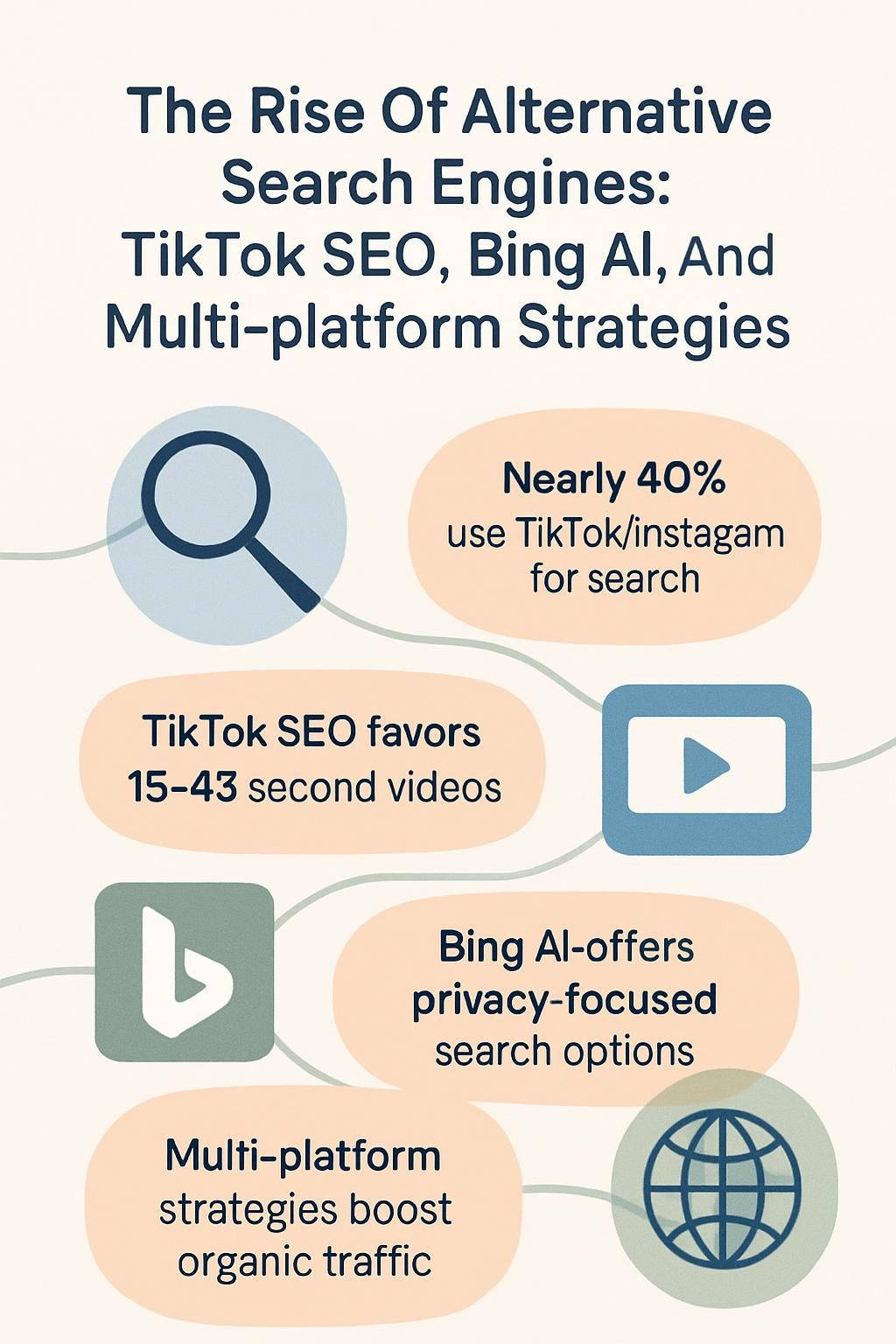
You probably search for stuff online every day. But here’s something wild: almost 40% of young people now skip Google and go straight to TikTok or Instagram. They’re finding recipes, products, and local spots through short videos instead of traditional search results.
This shift changes everything about digital marketing. You need to know how TikTok SEO works, what makes Bing’s AI tools special, and why spreading your content across different platforms matters more than ever. These fresh approaches can help you reach way more people and bring real traffic to your content. Ready to learn strategies that actually work in today’s search world? Let’s dig in.
Key Takeaways
- Almost 40% of people between 18 and 24 now search on TikTok or Instagram before trying Google, based on 2023 Pew Research data.
- User-generated content (UGC) like reviews, tutorials, and quick videos helps people discover new things. Gen Z trusts real users more than ads or official company sources.
- TikTok SEO works best with trending sounds, hashtags, strong hooks in the first three seconds, keywords in captions and speech, and high engagement. Videos between 15 and 45 seconds get the most love from the algorithm.
- Bing AI uses artificial intelligence to deliver instant answers and offers privacy-focused features that don’t track you as much. Search engines like DuckDuckGo also attract users who want better data protection.
- Multi-platform strategies include sharing content across TikTok, Bing AI, and YouTube Shorts. Update posts with fresh information, link your profiles together, and use analytics tools. These steps help brands increase organic traffic and stay visible everywhere.
The Shift in Search Behavior
Search has changed completely. People now turn to TikTok, Bing AI, and Instagram when they need quick answers or want to discover something new. Social media and interactive content shape what folks find online. Every swipe becomes part of a new way to hunt for information.
The growing role of social media platforms in search
Social media platforms like TikTok, Instagram, and YouTube have become discovery engines for millions of users. Young people often look for restaurants or trending topics using hashtags and short videos. They don’t even open Google anymore. In 2023, Pew Research found that nearly 40% of people aged 18 to 24 use TikTok and Instagram for search before trying traditional search engines.
Content optimization on these networks has become crucial. User-generated content shapes digital marketing strategies and pulls in organic traffic quickly. Social media algorithms love engaging posts, interactive content, and popular audio clips. Short videos grab attention in seconds. Cross-platform promotion spreads your message far beyond one app. Think of each platform’s algorithm as a puzzle to solve. More shares and comments usually mean your content shows up higher in feeds. This creates better audience engagement across every channel you use.
The rise of user-generated content as a search tool
Once social apps stepped into search, something interesting happened. User-generated content (UGC) became the new way to find things. Now recommendations come through short videos, personal reviews, and quick tutorials. Picture TikTok’s viral dance tutorials or 60-second recipes. These aren’t from experts. They’re real stories from regular people like you.
Search traffic increasingly flows to this UGC goldmine. In 2023, over 40% of Gen Z checked TikTok or Instagram first for answers, not Google. Content creators cut through noise with direct answers. They use hashtags and captions written in everyday language. No fancy terms needed. You get quick tips and honest opinions right at your fingertips. Digital marketing tactics now tap into UGC to boost organic reach. This drives engagement across platforms like YouTube Shorts and Reddit threads. The wave keeps growing. More people trust their peers over paid ads or official sources for quick facts on any topic.

TikTok SEO: A New Era of Search
TikTok is changing how people discover things online. The app uses short videos and smart algorithms to push fresh content to users. Digital marketers must rethink their search optimization tactics to catch this fast-moving wave of social discovery and traffic generation.
Short-form video content driving discovery
Short-form video content on TikTok and Instagram Reels changes how people find answers online. Instead of reading long articles or boring lists, users watch quick videos for trends and instant tips from real people. Creators turn product demos, reviews, or explanations into eye-catching clips. These videos pop up in search results all the time.
Social discovery feels more personal and interactive with these bite-sized videos. Platforms reward user-generated content with high visibility when it gets strong audience engagement. Think lots of likes, saves, and shares. Brands jump in because these short posts boost traffic generation faster than traditional blog posts. Social media algorithms favor fresh video SEO strategies. Even small creators can rank high for search terms. They just need to keep viewers hooked with lively, interesting content.
Optimizing for TikTok’s algorithm
TikTok shapes how millions find ideas, products, and trends daily. Getting your content to work with its search algorithm can boost your visibility and audience engagement big time.
- Use trending music tracks and hashtags to boost your content reach. TikTok’s engine pushes videos with current sounds or popular hashtags higher in results.
- Hook viewers in the first three seconds with something interesting. A quick smile, bold text, or funny intro stops users from scrolling past.
- Include target keywords from your topic naturally in video captions, on-screen text, and speech. This helps TikTok’s AI understand your content and match it to user searches.
- Keep videos short and sweet. Videos between 15 and 45 seconds work best for social media algorithms. People want quick value or humor, not long speeches.
- Ask questions or prompt users to share their stories in comments. Social discovery tools promote videos with lots of engagement.
- Post when your target audience is most active. Morning and evening posts often get more organic traffic. People scroll before work or after dinner.
- Use clear visuals and subtitles to improve the viewer experience for everyone. Many people watch with sound off. This helps your content optimization reach more viewers.
- Study what’s trending on TikTok’s “For You” page each week. Look at which shortform video styles get traction. Then adjust your own digital marketing efforts based on real UGC patterns.
- Track performance using TikTok Analytics and third-party AI-powered tools like Hootsuite or Later.com. Adjust strategies quickly when you see views or interaction rates drop.
These best practices help crack the code behind TikTok’s search engine optimization. They keep your content hot on digital marketing maps everywhere!

Bing AI and Its Competitive Edge
Bing AI shakes up search with fast answers and smart algorithms. Every search feels like a conversation, not homework. If you care about privacy and love tools that use Artificial Intelligence for smarter results, pay attention here.
AI-powered search and instant answers
Smart search engines like Bing AI use advanced technology to give quick answers. These platforms understand your questions using artificial intelligence. Sometimes they know what you want before you finish typing. Type “weather tomorrow” and see a clear forecast right at the top. No clicking around needed. This cuts out extra steps and makes users happy.
Digital marketers see higher engagement because people get what they want faster. Search optimization efforts now focus on appearing in instant answer boxes or voice assistants. Not just blue links anymore. Machine learning looks for context clues. It pulls data from huge sources, including user-generated content and social media posts. These AI-powered tools don’t just guess. They analyze numbers and past data. You get up-to-date information every time you search. This keeps things fast-paced in digital marketing today.
Privacy-focused search experiences
Bing AI and other discovery engines now give people more control over their personal data. Some search tools like DuckDuckGo, Brave Search, and Bing’s privacy features skip tracking cookies. They avoid creating user profiles for ads. Many users feel safer searching with these AIPowered Tools. They collect less private information. This shift has made privacy a selling point in social discovery and digital marketing.
Brands must rethink their content strategy to gain traffic generation from platforms that put privacy first. More people pick search experiences without hidden trackers. Organic search now depends on trust and honesty, not just smart algorithms. Adapting to this change is key for anyone planning MultiPlatform Strategies. You need to boost audience engagement across diverse channels and engines. Next comes the challenge of shaping your message so it shines everywhere at once.

Multi-Platform SEO Strategies
Getting your message to more people means working smart with search algorithms from TikTok, Bing AI, and YouTube. Keep your content flexible and focused. Search optimization is a moving target across every platform these days.
Adapting content for diverse search engines
People search for answers everywhere now, not just on Google. With so many options, brands and creators need fresh tactics for digital marketing. Here’s how to adapt your content for today’s wild mix of discovery engines:
- Research what users ask on each platform, from TikTok to Bing. Search intent changes fast between different apps.
- Tune videos with captions and hashtags to boost your video SEO on social apps like TikTok. Make every word count.
- Use short headlines and clear keywords. Bing AI favors direct language for instant answers.
- Format text posts and stories with bullet points or bolded phrases. They stand out in short-form feeds.
- Optimize images using descriptions and alt text. TikTok, Instagram, and Pinterest all scan this information.
- Keep privacy top of mind. Bing AI highlights safer user experiences in its Search Engine Optimization SEO rankings.
- Test different multimedia formats. Try carousels on Meta-owned platforms or interactive content like polls where allowed.
- Share user-generated content. Social discovery thrives on authentic voices, not polished ads.
- Update older posts with new data often. Search algorithms love fresh facts, especially after Google’s 2023 core updates.
- Cross-promote links between channels using branded hashtags or calls-to-action. This creates better cross-platform promotion.
Each move taps into how people find things today. They want it quickly, visually, and from real users like themselves.
Leveraging cross-platform visibility
Reaching audiences today means showing up where they spend time. Brands and creators use many channels, not just one. This approach boosts digital marketing and grows organic traffic.
- Share short-form videos on TikTok, Instagram Reels, and YouTube Shorts. This spreads your voice to all corners of social discovery.
- Refresh content style for each site’s vibe. What hooks TikTok fans may need tweaks for Bing AI or Google Search.
- Link accounts across platforms in your bios. This helps users jump from platform to platform easily.
- Encourage user-generated content (UGC) contests. Fans sharing your hashtag on multiple social platforms means more eyes. It creates stronger search optimization too.
- Track analytics with tools like Sprout Social or SEMrush. Analytics show which content brings the best audience engagement across discovery engines.
- Use consistent branding, logos, and taglines everywhere you post. Consistent visuals stick in viewers’ minds no matter their social media app.
- Repurpose video SEO assets using AI-powered tools like ChatGPT or Canva Magic Studio. Optimize for different formats and search algorithms.
- Collaborate with influencers active on Facebook, X (formerly Twitter), Pinterest, or LinkedIn. Cross-platform partnerships open doors to new audiences hungry for interactive content.
Next up is how adapting your message unlocks even more ways to win in multi-platform strategy.

Conclusion
Search engines like TikTok and Bing AI change how we find answers every single day. People now turn to short videos, user-generated tips, and interactive content for quick discoveries. Smart brands use multi-platform strategies to boost traffic generation. They stay visible across all platforms.
Adapting to these new digital marketing trends keeps you ahead in the race for organic search attention. You need to stay curious and test out fresh ideas. Watch your audience grow when you embrace these changes. The old ways of search are fading fast. The future belongs to those who adapt and create content that works everywhere!

Text content